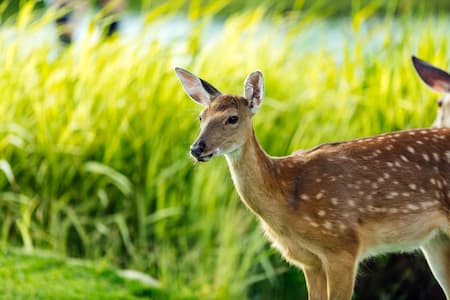
Whitetail habitat improvements require an integrated, professional approach focusing on providing essential seasonal needs: high-nutrition food sources, diverse cover, and water sources. As an experienced forestry mulching company serving the Port Huron area, we understand every aspect of land management for improving whitetail habitats. Our knowledgeable team has put together a few tips and strategies to help you attract and retain a healthy deer population.
Plotting Your Food Plots
Professional food plot management extends beyond simply tilling the land and planting a few seeds. It involves a tailored, science-based approach to provide consistent nutrition throughout the year, helping your food plots perform season after season.
- Soil Testing is Essential: Conduct a soil test to determine nutrient deficiencies and pH levels before planting; amend the soil as recommended to ensure optimal plant growth and a healthy food plot.
- Vary Your Crops for Year-Round Nutrition: Plant a mix of annuals (e.g., corn, soybeans, brassicas, oats) and perennials (e.g., clovers, alfalfa) to provide forage from spring green-up through the critical winter months.
- Location Matters: Position food plots near secure cover and water sources to encourage daytime use. Use irregularly shaped plots and place them where deer feel safe, ensuring easy, low-impact hunter access routes away from bedding areas.
Stand by Your Stand
Managing your forest stand is critical for providing both browse and cover, which is often a limiting factor in Michigan.
- Promote Early Successional Habitat: Use techniques like forestry mulching or group selection in small (1 to 10-acre) irregularly shaped patches to allow sunlight to reach the forest floor, stimulating the growth of young, palatable woody browse and shrubs like aspen, dogwood, and sumac.
- Encourage Mast Production: Thinning stands of oak and beech allows remaining trees to develop fuller crowns and produce more consistent nut crops, a vital fall and winter energy source.
- Establish Thermal Cover: Maintain or plant dense conifer stands (spruce, red pine, white cedar) of 3-10 acres in size to provide crucial thermal protection from wind and snow during winter.
Secure Sanctuaries & Trustworthy Travel
Whitetail deer, especially mature bucks, require secure, low-pressure sanctuaries where they can bed during daylight hours.
- Utilize Hinge Cutting: Partially cut undesirable trees (e.g., soft maples, box elder) and push them over to create a dense, tangled matrix on the forest floor, which serves as excellent bedding cover and provides extra browse.
- Establish Native Warm-Season Grasses: Plant native grasses like switchgrass or big bluestem in open areas adjacent to forest edges to offer fawning cover in the spring and secure bedding during the hunting season.
- Designate Sanctuaries: Designate specific, hard-to-access areas as sanctuaries where hunting pressure is strictly prohibited. Design travel corridors and stand locations to hunt the edges of these areas with favorable wind directions, minimizing disturbance within the sanctuary itself.
To find out more about our Whitetail habitat improvements like tilling, hinge cutting, seed planting, and forestry mulching for properties in Port Huron and the surrounding areas, give the pros at Stafford Land Management a call today at 586-899-9795!


Looking For Top Rated Forestry Mulching in Port Huron? Book Now!
