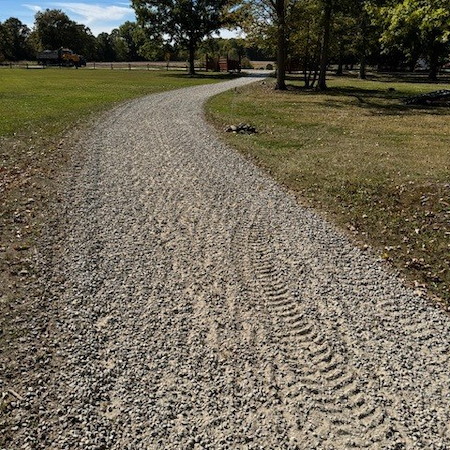
Gravel driveway maintenance in Michigan is different from many other places. Port Huron sits on the Blue Water coast, so lake-effect snow, freeze-thaw cycles, and spring rains all push gravel around. If you see ruts, washouts, or standing water, it is time to plan service. Homeowners across Fort Gratiot, Kimball Township, and Marysville ask us one thing most: how often should you regrade?
Here’s a clear, local answer from Stafford Land Management, your trusted land management team. If your lane needs attention now or you want to get ahead of spring, schedule professional gravel driveway repairs before minor issues spread.
Why Port Huron Gravel Driveways Need Regular Regrading
Our weather shapes your driveway. Winter brings freeze-thaw cycles that loosen the surface and break down fines. Spring melt and heavy rains flow toward the Black River and Lake Huron, cutting channels along the easiest path. Summer dry spells then set those ruts in place. Trucks, delivery vans, and trailers add more load. Over time, your driveway’s crown flattens, water lingers, and the base weakens.
Regular regrading keeps the surface shaped, compacts fresh material, and guides water off the lane. That protects the base and extends the life of the driveway. **Ignoring drainage and crown lets small problems become structural issues.**
How Often Should You Regrade? A Simple Schedule That Fits Michigan
Every property is different, but most Port Huron homeowners find a steady rhythm works best. Use this schedule as a planning guide and adjust with a pro’s advice after a site visit.
- Light residential traffic: regrade once a year, usually late spring or early summer.
- Busy households, frequent deliveries, or long driveways: regrade 1 to 2 times per year.
- Shared private roads or HOA lanes: set seasonal service, twice per year, and after major storms if needed.
- Farm and rural access lanes in St. Clair County: plan spring regrade after thaw and a late summer touch-up before fall rains.
This approach is less about the calendar and more about conditions. When water stops shedding cleanly and small ruts appear again, it’s time. **Waiting through another season usually means a deeper fix later.**
Signs You Should Call For Regrading Now
You do not need to be an expert to spot early warning signs. Walk the lane after a rain and look for patterns rather than single potholes.
- Washboard ripples or vibration at low speeds.
- Ruts that return in the same tracks after traffic.
- Puddles or damp stripes that linger a day after rain.
- Gravel pushed to the edges with a low, flat center.
- Exposed fabric, larger stones showing through, or scattered fines collecting in low spots.
Any one of these means water is winning. **Standing water always finds a way to deepen ruts and soft spots.** A quick professional evaluation will confirm if you need simple reshaping or a more thorough repair.
What Professional Regrading Typically Includes
Professional gravel driveway maintenance is a service plan, not a single pass. A trained crew checks the base, drainage, and traffic paths, then sequences the work so it lasts.
On a typical Port Huron job, the crew will assess the whole lane, recover displaced material from the shoulders, and add new aggregate only where it truly benefits the structure. They will set an appropriate crown to move water off the travel lanes and compact the surface in controlled lifts. If a culvert or ditch is not moving water efficiently, they will note that during the visit and coordinate the right fix so the surface treatment holds up.
Materials matter as much as technique. In Michigan, a crushed blend with enough fines to lock up under compaction performs well, while a too-round stone tends to roll and wash out. The right choice depends on your base, slope, and drainage layout.
Choosing the Right Gravel Mix For Michigan Weather
In coastal communities like Port Huron and Burtchville, fine materials that bind under pressure help resist washouts from sudden storms. In clay-heavy inland areas toward Kimball Township, a blend that sheds water and resists pumping under tires is important. The size mix and fines content help determine how tight the surface locks, how it drains, and how it stands up to snowplows and trailers.
Your land management crew will match the aggregate to your driveway’s slope, shade, and soil. A short, shaded lane off Lakeshore Road may need a slightly different blend than a sun-baked farm access south of town. The goal is the same: a tight surface that drains quickly and resists rutting.
Seasonal Timing: The Best Months To Book Service
In Port Huron, the sweet spot for regrading is usually late spring after the frost has left the ground and things start to dry. Many owners also schedule a late summer or early fall visit to tighten the surface before leaf drop and fall storms. Winter service is sometimes possible for emergency corrections, but it is less predictable and usually not ideal for long-lasting compaction.
Spring calendars fill fast across St. Clair County. **Booking early helps you avoid the rush and secures better timing for compaction and drainage checks.** If you want to be first on the schedule after thaw, reach out now so we can pencil in a flexible window.
Local insight: Freeze-thaw cycles can undo a quick fix. Plan your regrading after the ground has released moisture and before repeated heavy rains. That window gives you the best compaction and a surface that sheds water cleanly.
Traffic Patterns, Vehicle Weight, and Driveway Length
Use affects schedule as much as weather. Short residential lanes near the north end may only see two vehicles a day, while a shared rural road in Kimball or Wales Township handles pickups, trailers, and delivery trucks. The heavier and more frequent the load, the more often you should plan service.
Longer lanes need special care at curves and bottoms of slopes where drivers brake or turn. Those spots lose fines quicker and develop washboard. A pro will tighten these high-wear areas during each visit so the whole drive ages evenly.
Drainage: The Foundation of Every Long-Lasting Gravel Drive
Regrading without drainage is a short-term patch. Proper crown, shaped shoulders, and clear outlets give water an easy path off your driveway and into safe discharge areas. In neighborhoods near Lake Huron, flat grades can make this tricky, so attention to subtle slope changes matters.
Where needed, your crew may recommend ditch cleanouts or culvert adjustments. That is part of long-term maintenance planning. When the water moves away quickly, everything else lasts longer.
Rural Driveway Maintenance Around Port Huron
Port Huron blends lakeshore suburbs with working farmland. That means your driveway might cross soft ditch lines, pass under shade, or travel along windy open fields. Sandier soils closer to the shoreline behave differently than tighter clays inland. A maintenance plan that respects those conditions prevents chronic trouble spots.
For rural homeowners, coordination matters. Shared access routes should have a single schedule and a shared service standard. That keeps costs predictable for each homeowner and prevents mismatched fixes that fail at the seams.
An Easy Way To Stay Ahead Of Repairs
You do not need to watch the weather like a contractor. Keep an eye on how water leaves the surface after a steady rain and listen to how your vehicle sounds. If the ride turns buzzy or the steering wheel chatters, that washboard is back. When you notice the same puddles forming after every storm, it is time to call a pro before the base softens.
For background and planning, some homeowners like to read up on gravel driveway maintenance in michigan and then schedule a site visit. A quick walk-through with a land management specialist will give you a clear plan based on your lane’s length, slope, and soil.
Why Work With a Local Land Management Team
Local experience saves time. Crews who work Port Huron, Fort Gratiot, and Marysville daily know the soil, the weather swings, and the common problem spots. They also know how to set the crown for your lane so it sheds water without feeling tippy and how to compact material so it locks up tight.
Stafford Land Management treats each driveway like a small drainage project. The goal is a safe, smooth surface that lasts. That starts with a straightforward site visit and ends with a result you can feel the next time you pull in with the boat or trailer.
Recommended Maintenance Plan for Port Huron Homeowners
Use this simple plan to keep your driveway in great shape year round. It is built around our local weather and traffic patterns.
- Annual checkup in late spring to confirm crown and drainage after thaw.
- Touch-up service in late summer or early fall if traffic is heavy or storms have cut channels.
- Prompt attention to recurring ruts, washboard, or standing water so issues do not reach the base.
If you manage a shared lane, set a single service window and agree on a standard. That keeps the whole road safe and prevents uneven wear from piecemeal fixes.
Ready To Regrade? Here’s What Happens Next
Start with a short call. We will book a time to see the driveway, confirm access and drainage, and explain the best material and compaction approach for your site. You will get a clear plan for regrading and repairs, and a schedule that fits the season and your calendar.
If your driveway already shows ruts, washouts, or washboard, we recommend you schedule regrade your gravel driveway soon so fresh storms do not set the damage deeper.
Get Trusted Gravel Driveway Repairs in Port Huron
Keep your vehicle, boat, and trailers on a smooth, safe surface year round. Call Stafford Land Management at 586-899-9795 to plan service. If it is time to act now, book your gravel driveway repairs and protect your lane before the next weather swing.


Looking For Top Rated Forestry Mulching in Port Huron? Book Now!
